
LED Kitchen Lighting: Strip, Profile and Sensor - How to Choose
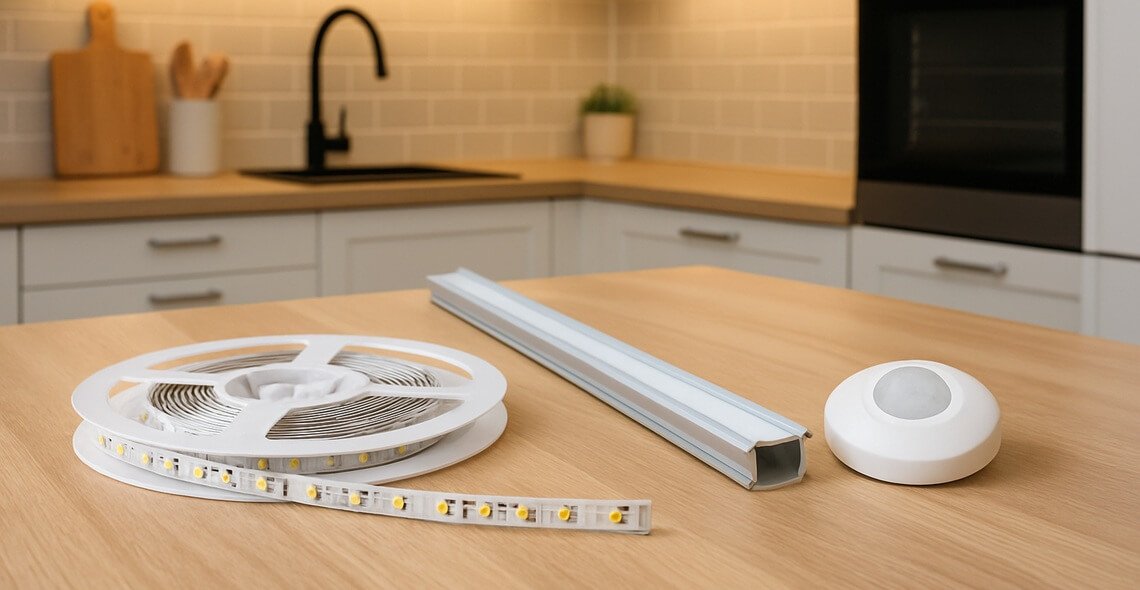
Planning a kitchen makeover and looking for a practical way to light your worktop? Did you know that LED lighting can give you even light with minimal energy consumption?
LED kitchen lighting is no longer just an extra convenience – it is an important part of modern interior design. It ensures good visibility and improves the functionality of the work area.
One of the most popular solutions is an LED strip for the kitchen, combined with a suitable profile and sensor control. If you are unsure whether this option is right for you, stay with us until the end! In this article, we at Lotos Trading will help you make an informed choice.
How to Choose the Right Kitchen Lighting?
When choosing LED kitchen lighting, first decide what type of LED strip you need.
Regardless of the size of your worktop, there are several key factors to consider when choosing the right lighting – for example, the layout of the kitchen cabinets, the dimensions of the worktop and the amount of natural light.
It is also important to consider the activities you do most often, as food preparation areas require good visibility and sufficient illumination. The main criteria to pay attention to are:
Light Colour
If you cook often and want maximum visibility on the worktop, neutral light is usually the more practical option. For the kitchen work area, the most common choices are:
- Neutral white (around 4000 K) – gives clean light without a yellow or blue tint; convenient for everyday work on the worktop.
- Warm white (around 3000 K) – softer and cosier, suitable if the kitchen is open to the living room and you want a warmer atmosphere.
Brightness and LED Density
LED strips differ in power and in the number of LEDs per metre. For under-cabinet lighting, strips with medium or higher brightness are usually suitable. A strip that is too weak often creates "spots" and uneven light on the worktop, especially when mounted higher up.
For longer runs (over 2–3 metres), the strip and power supply must be selected so that there is no noticeable drop in light at the end. This is achieved through correct sizing and, if necessary, by feeding power from both ends.
Moisture Protection Rating
There is always steam, grease and moisture in the kitchen. That is why people often choose:
- Coated LED strips (e.g. silicone) – easier to clean and better protected from splashes.
- Uncoated strips – suitable if they are placed in a profile and away from direct contact with water.
Before buying, check the stated protection rating and the manufacturer's recommendations.
LED Lighting Profile: Recessed or Surface-Mounted
An LED strip is rarely stuck directly onto the cabinet. It is usually placed in an aluminium LED profile, which helps with cooling and hides the strip.
On our website you will find specialised LED lighting profiles suitable for kitchens.
The surface-mounted profile is the most common solution for under-cabinet LED lighting in existing kitchens. It is mounted on the underside of the wall cabinets and is convenient for finished kitchens where you do not want any additional work on the furniture.
Surface-mounted profiles come in various lengths and shapes, with frosted or clear covers that diffuse the light.
The recessed profile is placed in a pre-cut groove in the bottom of the cabinet or in the worktop itself. It provides a very clean look – the profile sits almost flush with the surface.
Installation is more complex – it requires routing or preparation by the furniture maker. It is suitable for new kitchens or major renovations.
Both types of profiles can be combined with sensor control and different LED strips, depending on the required brightness.
Motion Sensor or Touch Sensor
Sensor control makes LED kitchen lighting much more convenient in everyday life. The two most popular options are:
- Motion sensor – with this type, the light switches on when movement is detected within a certain range. It is especially convenient when you often enter the kitchen with your hands full or want the light to turn on automatically as you approach the worktop.
- Touch sensor – usually mounted on the profile or under the bottom edge of the cabinet. It lets you switch the light on and off with a light touch, without a mechanical button that can get dirty or wear out. It often allows dimming as well – holding your finger on it gradually increases or decreases the light, which is convenient in the evening.
Frequently Asked Questions
Which light is better for the kitchen – warm or neutral?
For the worktop, many people choose neutral white light because it provides better visibility and more realistic colours of food. If you want a cosier feel, especially in kitchens open to the living room, warm light is a good compromise, but it is best to see it in person before deciding.
Is an aluminium profile required for the LED strip?
The profile is not just for a better look – it improves the cooling of the strip and extends its life. It also hides the individual LEDs and makes the line of light more even. In a kitchen, where there is steam and grease, the profile also makes cleaning much easier.
Can I install LED lighting under the cabinets myself?
Many LED lighting systems are designed for easy installation – cutting the strip at the marked points, placing it in a profile, and connecting it to the power supply and sensor. However, it is important to follow all electrical safety requirements; if in doubt, it is wise to contact an electrician or your furniture contractor.
How can I avoid visible "dots" of light on the worktop?
The strip + profile combination is key here. Dense strips with more LEDs per metre and a frosted profile cover usually give the most even line of light. The distance between the profile and the worktop also matters – the greater it is, the more softly the light is diffused.
Leave a Comment